Along the slow, wide bends of the Niger River in Mali lives a people whose history flows with the water they depend on. The Bozo, also known as Boso, Sorogo, or Tieyaxo Bozo, are among West Africa’s oldest riverine communities. For centuries, their lives have been shaped by fishing, seasonal movement, belief, and a deep understanding of one of Africa’s greatest rivers. Often called the masters of the river, the Bozo are not simply fishermen by trade. Their identity, economy, and worldview are tied to water in ways that go beyond occupation. To understand the Bozo is to understand the Niger itself as a living force rather than a boundary on a map.
A People of the Riverbanks
The Bozo are found predominantly along the Niger River in Mali, especially in the Mopti region and the Inner Niger Delta. Smaller communities also live in Burkina Faso and Côte d’Ivoire wherever river systems allow their way of life to continue. Today, the Bozo population in Mali is estimated at about 230,000, with a global population of roughly 257,500 across three countries. The name Bozo is believed to come from the Bambara words bo-so, meaning straw house or bamboo house. While the people accept Bozo as a collective name, they often identify themselves by clan names such as Sorogoye, Hain, and Tieye. These clan identities matter, especially when it comes to dialect, fishing territories, and local authority. The Bozo have long maintained peaceful relations with neighboring groups such as the Dogon and the Nono. While others control the land, the Bozo control the waterways, a balance that has shaped social cooperation across central Mali for generations.
An Ancient Presence
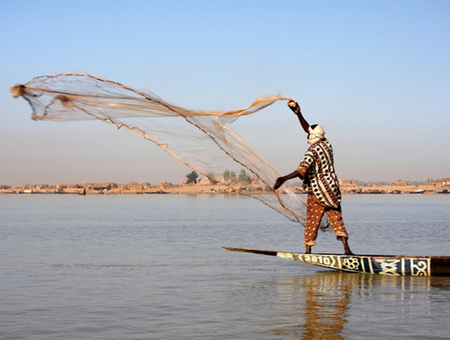
Rock drawings linked to the Bozo date back as far as 6,000 years, suggesting a very old human presence along the Niger. Much of Bozo culture as it exists today, however, took shape during the period of the Ghana Empire around the tenth century. It was during this era that the Bozo took firm possession of the riverbanks and developed fishing systems that supported growing urban centers. The Bozo are credited with founding some of Mali’s most important historic cities, including Djenné and Mopti. These cities later became major hubs of trade, Islamic learning, and scholarship across West Africa. The Bozo are also linked to the early foundations of Ségou, a city that would later become the capital of the Bambara Empire and remains an important administrative and commercial center today. Although political control of these cities shifted over time, the Bozo presence along the river never disappeared. Their boats continued to move goods, people, and knowledge along the Niger long after empires rose and fell.
Living With Water and Climate
Life along the Niger requires constant adaptation. The Bozo region has a hot, dry climate, with temperatures often ranging from 73 to 97 degrees Fahrenheit. Rainfall is limited, averaging between eight and twenty inches annually. Yet during the rainy season, the Niger floods vast areas of land, sometimes covering up to 20,000 square kilometers. For the Bozo, flooding is not a disaster. It is a signal to move. As seasonal nomads of the river, Bozo families load their homes, tools, and belongings into their boats when water levels rise. They relocate to new waterside sites, sometimes settling temporarily on small islands that appear as floodwaters recede. When conditions change again, they move once more. This cycle has defined Bozo life for generations. The surrounding environment is rich in wildlife. Crocodiles and hippopotamuses share the river. Giraffes, elephants, lions, and panthers inhabit nearby lands. Birds, monkeys, and snakes are common sights. The Bozo have learned to live alongside these animals, not apart from them.

Language of the River
The Bozo speak languages belonging to the Soninke Bozo subgroup of the northwestern Mande branch of the Niger Congo language family. Although often referred to as a single language, Bozo is a cluster of related varieties with significant diversity. Ethnologue recognizes four main Bozo languages based on literacy needs. These include Hainyaxo, Tièma Cièwè, Tiéyaxo, and Sorogaama. Sorogaama is the most widely spoken, with about 200,000 speakers, and includes several dialects such as Pondori, Kotya, Korondougou, and Debo. Bozo languages are tonal, using three lexical tones to distinguish meaning. Many Bozo also speak regional languages such as Bamana, Maasina Fulfulde, or Western Songhay, reflecting their role as traders and intermediaries along the river.
Settlement and Daily Life
Bozo villages are typically small and compact, located close to streams or riverbanks. Housing reflects mobility and environment. Temporary fishing camps consist of straw huts. In flood plains, homes are built on artificial mounds to stay above rising water. More permanent villages feature rectangular houses made from sun dried bricks, with flat roofs supported by wooden logs and covered with packed earth. Bozo society is patriarchal. Unmarried men live in bachelor huts, while married couples live with the husband’s family. Land is owned communally and administered by a village headman who also serves as clan chief. He oversees disputes, rituals, and relations with neighboring communities. Marriage is arranged through extended families, with negotiations handled by male intermediaries. The groom provides gifts, performs bride service, and pays a bride price, although in some cases families exchange women instead. Polygyny is practiced within Islamic limits.
Fishing as Knowledge
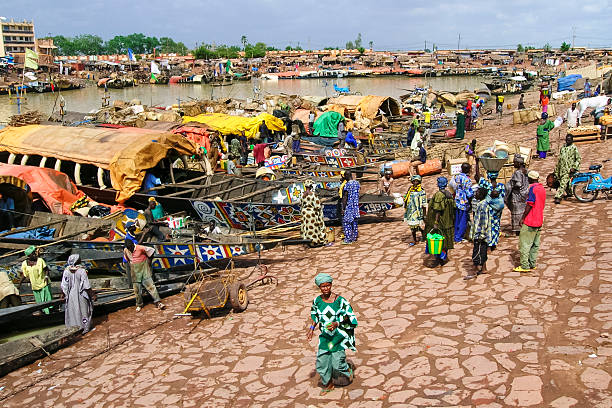
Fishing is the core of Bozo life. Men and boys are responsible for fishing, navigating the river, and maintaining boats. The annual Bozo fishing catch is one of Mali’s principal exports, making their work nationally significant. Bozo fishermen are renowned for their skill and knowledge of river behavior. They understand currents, breeding cycles, and seasonal changes in ways that cannot be learned from books. This knowledge is passed down through practice, observation, and instruction from an early age. Each village also has at least one professional hunter who hunts large river animals such as hippopotamuses, crocodiles, and manatees, activities that require both skill and ritual preparation. Women play a central role in sustaining daily life. They process and sell fish in markets, raise vegetables and tobacco, manage household chores, and engage in small scale commerce such as baking. Their labor supports both family survival and local trade.
Belief, Islam, and Older Spirits
Today, the Bozo are predominantly Muslim and observe the five pillars of Islam. Daily prayers, fasting during Ramadan, almsgiving, and pilgrimage are part of religious life. Yet beneath Islamic practice, older beliefs continue to shape worldview and symbolism. Before Islam, the Bozo practiced a traditional religion centered on Faro, the creator god and spirit of water. Faro remains important in stories, symbols, and rituals. According to Bozo tradition, they are the first twins, born into a world shaped by water, balance, and order. Their animal totem is the bull, whose body represents the Niger River and whose horns symbolize fishing pirogues. This imagery reflects how deeply belief and environment are connected.
Sigi and the Power of Masquerade
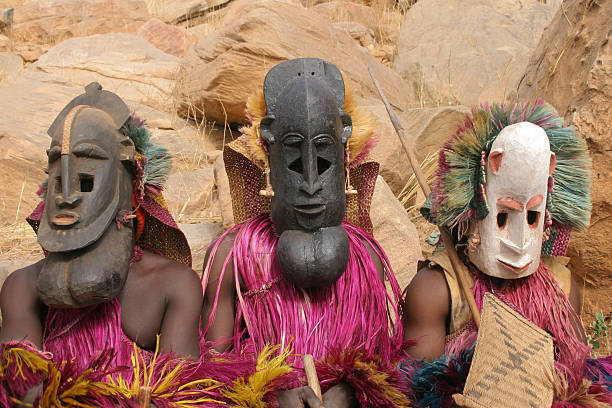
One of the most striking elements of Bozo and Bamana shared folklore is the legend of Sigi, the bush buffalo. Sigi represents strength, abundance, and masculine power. His body symbolizes the Niger, while his horns stand for the canoes that bring wealth through fishing. Sigi appears in masquerades where massive puppets, animated by multiple performers, move through communities. These performances are both spiritual and social events. Sigi carries figures representing farmers, women pounding millet, musicians, and Faro himself. Songs praise his beauty and power, accompanied by drums, rattles, and castanets. These masquerades are believed to have been first created by Bozo fishermen, blending art, belief, and communal storytelling into a living tradition.
Change Along the River
Bozo life is changing. Technology has reached the riverbanks. Mobile phones, radios, televisions, and satellite signals connect Bozo communities to the wider world. Roads and motorboats have increased mobility. Some Bozo children attend schools in nearby towns. The Bozo are not a people of the past. They are a living river culture, balancing ancient knowledge with modern pressures. Their boats still cut through the Niger at dawn, their nets still rise heavy with fish. Their stories still tie human life to water, spirit, and survival. In a region often described through crisis or conflict, the Bozo remind us of continuity. They show how culture can remain rooted while moving, how identity can flow without breaking.