Africa carries close to one fifth of the Earth’s landmass, and within that space sits a range of natural features found nowhere else. In 2013, conservationists, naturalists, and environmental experts from around the world agreed on seven sites that best represent the continent’s natural power and beauty. The announcement was made in Arusha, Tanzania, a fitting location in the heart of East Africa’s conservation landscape. These seven wonders are not monuments built by human hands, they are living systems shaped by time, climate, geology, and life itself. Some feed millions of people, while others host migrations so large they can be seen from the sky. Together, they tell a story of Africa as a continent of movement, survival, and deep natural memory.
1. Nile River
Location: Ethiopia, Sudan, Egypt, Uganda, DR Congo, Kenya, Tanzania, Rwanda, Burundi, South Sudan, Eritrea
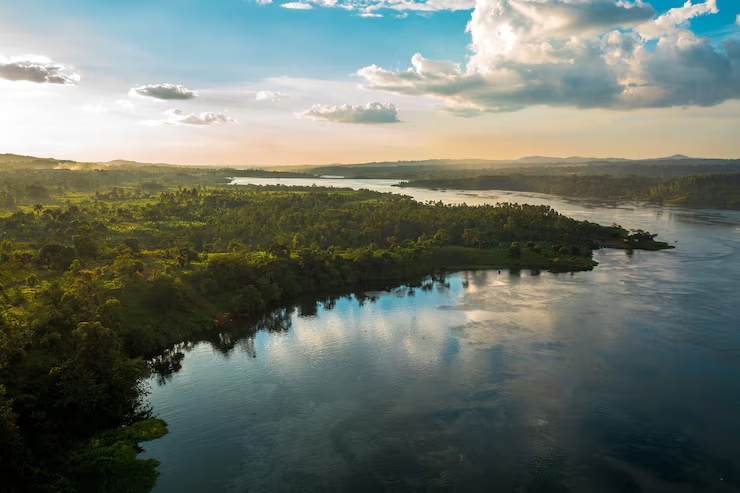
The Nile River is the longest river in the world, stretching about 4,145 miles from its farthest source to the Mediterranean Sea. It flows northward through northeastern Africa, cutting a green corridor through dry land and desert. For Sudan and Egypt especially, the Nile is not just water. It is life. Nearly all major cities, farms, and historical sites in Egypt sit close to its banks. Ancient Egyptian civilization rose along this river, using its seasonal floods to grow food and build a stable society. The same river supported powerful Sudanese kingdoms long before modern borders existed. The Nile ends in a wide delta in northern Egypt, where it empties into the Mediterranean Sea. This delta remains one of the most fertile regions in Africa. Even today, millions depend on the river for drinking water, irrigation, fishing, and transport. Among Africa’s natural wonders, the Nile stands apart as both a physical feature and a historical backbone.
2. Mount Kilimanjaro
Location: Tanzania
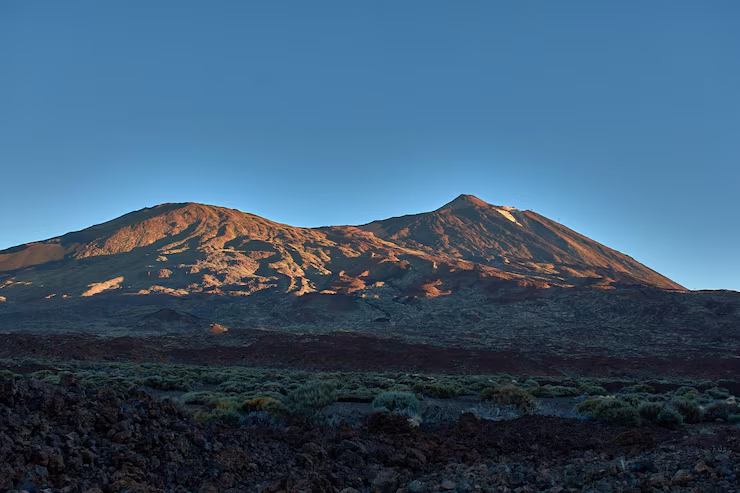
Mount Kilimanjaro rises sharply from the plains of northern Tanzania. At 19,341 feet above sea level, it is the highest mountain in Africa and the tallest free-standing mountain in the world. It is also a dormant volcano. Kilimanjaro is made up of three volcanic cones: Kibo, Mawenzi, and Shira. Kibo is the highest and the only one with a remaining ice cap, though that ice has been shrinking steadily over recent decades. The mountain sits within Kilimanjaro National Park and attracts climbers from across the globe. Several trekking routes lead to the summit, with the Machame Route often described as the most scenic. While Kilimanjaro does not require technical climbing skills, altitude sickness remains a serious risk. Fatalities occur every year, which has led the Tanzanian government to enforce strict climbing regulations. Beyond tourism, Kilimanjaro plays a key environmental role. Its slopes support forests that feed rivers and farmland below. For local communities, the mountain is both a spiritual symbol and a source of water and livelihood.
3. Sahara Desert
Location: Algeria, Chad, Egypt, Libya, Mali, Mauritania, Morocco, Niger, Sudan, Tunisia, Western Sahara
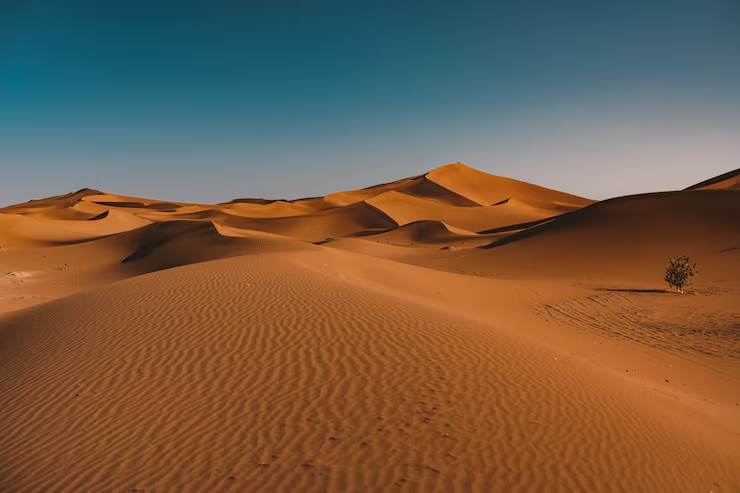
The Sahara Desert is the largest hot desert on Earth. It covers roughly 3.5 million square miles, an area close to the size of the United States. It stretches across most of North Africa, broken only by the Mediterranean coast, the Nile Valley, and the Atlas Mountains. Despite its harsh image, the Sahara is not lifeless. It supports adapted species such as the addax, dama gazelle, Saharan cheetah, desert foxes, monitor lizards, and dromedary camels. Some areas even host desert crocodiles. Human life persists too, especially around oases, where water allows farming and settlement. Nomadic communities have crossed the Sahara for centuries, trading salt, gold, and goods long before modern states emerged. Today, parts of the desert support controlled tourism activities such as camel treks, cultural tours, and desert camping, often guided by local people with deep knowledge of the terrain. The Sahara is a reminder that survival does not always require abundance. Sometimes, it requires adaptation
4. Serengeti Migration
Location: Tanzania and Kenya
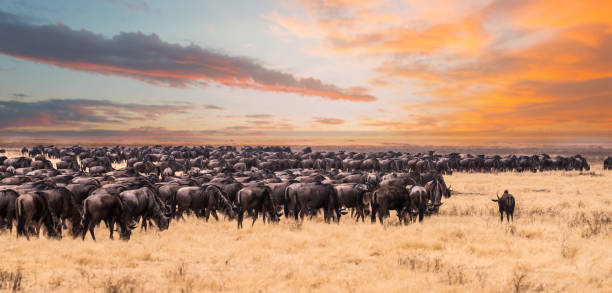
The Serengeti ecosystem stretches from northern Tanzania into southwestern Kenya, where it is known as the Maasai Mara. This region hosts the largest land animal migration on the planet. Every year, more than 1.7 million wildebeest, alongside hundreds of thousands of zebras and gazelles, move in a vast circular journey in search of fresh grass and water. The migration begins in the southern Serengeti around the Ngorongoro Conservation Area. Between January and March, the animals gather on the short grass plains, where around 500,000 calves are born within a short period. As the dry season approaches in May, the herds begin moving northwest. They pause around the Grumeti River before pushing further north. By July and August, many reach Kenya, facing dangerous river crossings filled with crocodiles and strong currents. The journey is both a story of life and loss. An estimated 250,000 wildebeest die each year due to thirst, exhaustion, or predation. At the same time, the migration sustains predators such as lions and supports one of the richest wildlife ecosystems on Earth.
5. Ngorongoro Crater
Location: Tanzania
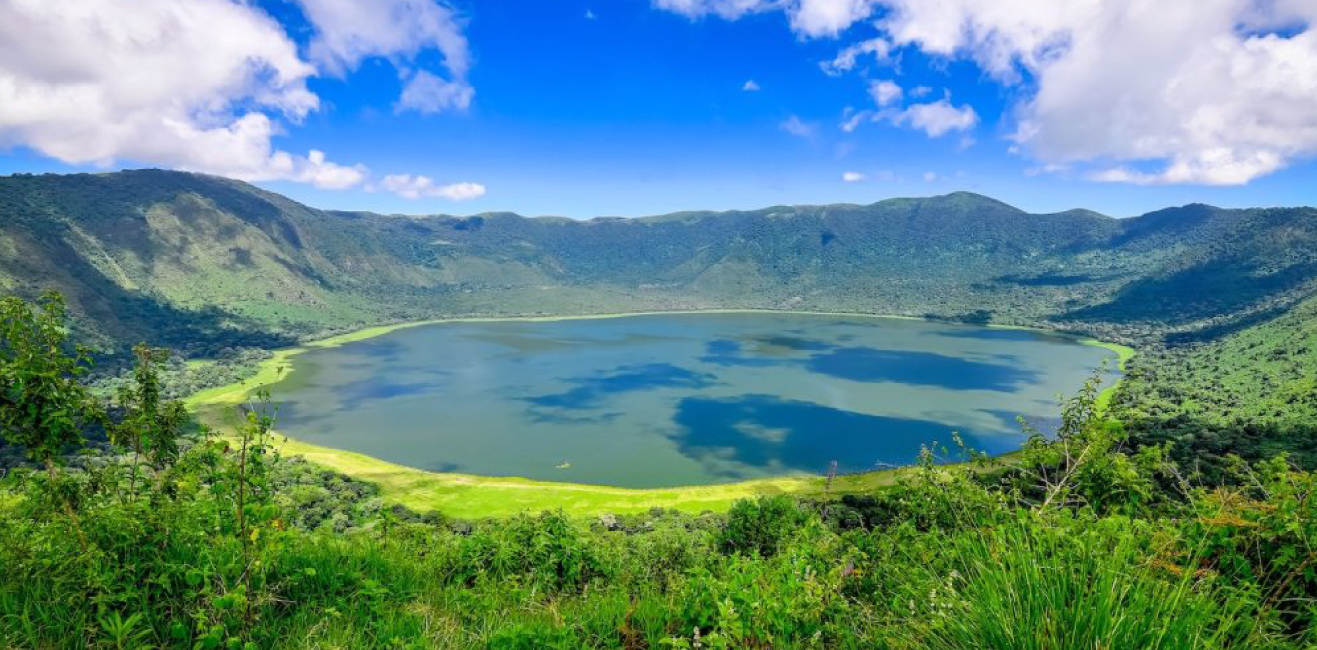
The Ngorongoro Crater lies west of Arusha in northern Tanzania. It is the largest intact and unfilled volcanic caldera in the world. Formed about two to three million years ago, the crater resulted from a massive volcano that collapsed inward after an eruption. The crater walls rise steeply, enclosing a self-contained ecosystem. On the eastern highlands, montane forests thrive due to higher rainfall. The western walls are drier, covered with grassland and scrub. The crater floor itself is mostly open grassland, with small wooded areas dominated by fever trees. Within this natural bowl lives a dense population of wildlife, including lions, elephants, rhinoceroses, buffalo, and countless bird species. Because animals rarely leave the crater, it offers one of the best chances in Africa to observe diverse wildlife within a compact area. Ngorongoro is also home to Maasai pastoralists, who live around the conservation area under strict land-use rules. The site shows how human culture and wildlife conservation continue to coexist under careful management.
6. Okavango Delta
Location: Botswana
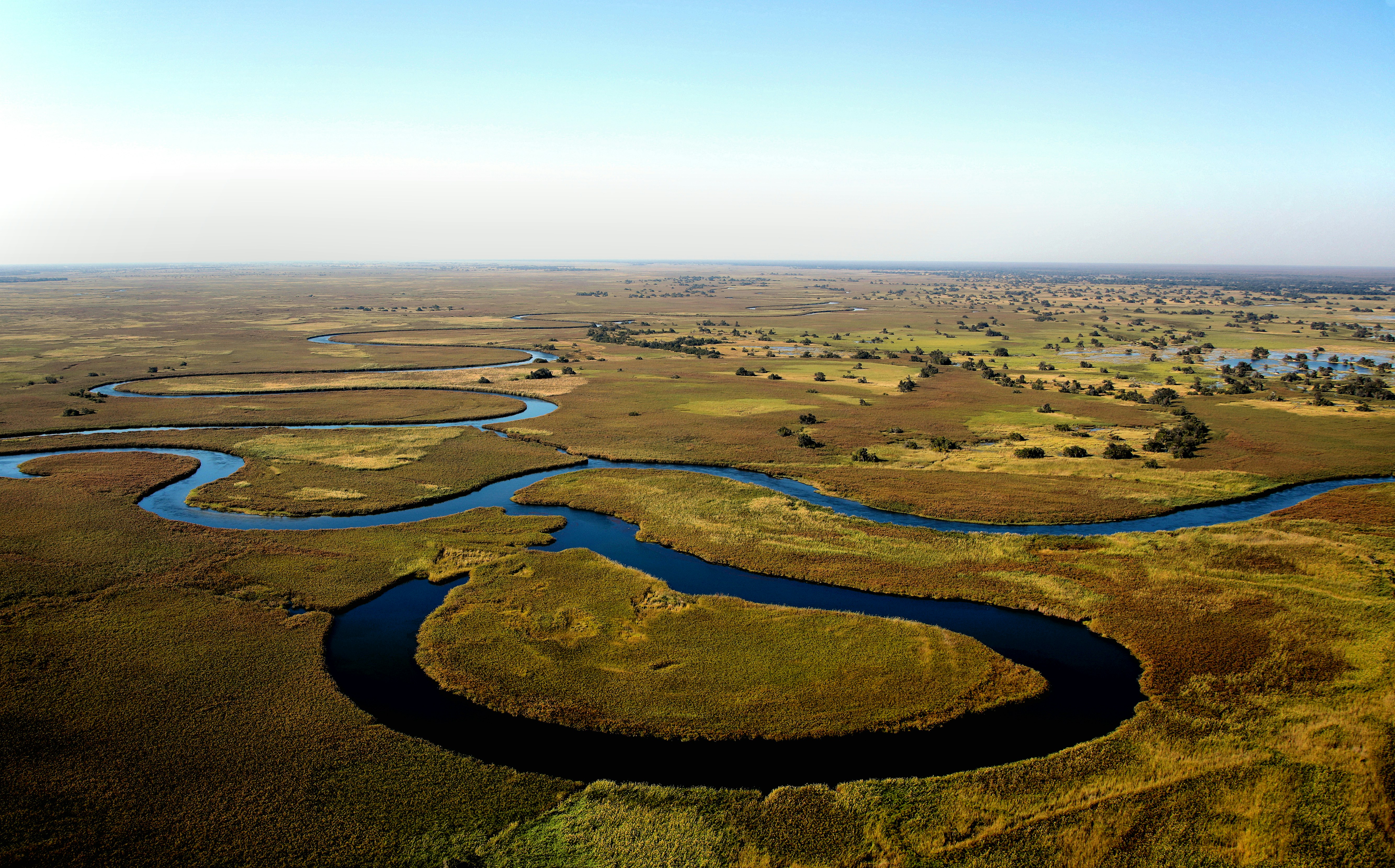
The Okavango Delta is one of Africa’s most unusual landscapes. Instead of flowing into the sea, the Okavango River spreads into a vast inland delta within the Kalahari Basin. During the dry season, the river’s waters fan out into swamps, channels, and islands, then slowly evaporate. This seasonal flooding transforms the region into a rich habitat. The delta supports African bush elephants, hippopotamuses, lions, cheetahs, buffalo, rhinoceroses, and many antelope species. Birdlife is equally abundant. On the eastern edge of the delta lies the Moremi Game Reserve, one of Botswana’s key conservation areas. The entire delta has been recognized as a UNESCO World Heritage Site due to its size, beauty, and ecological importance. The Okavango shows how water can bring life even to the edge of a desert, reshaping land and sustaining biodiversity through natural cycles.
7. Red Sea Reef
Location: Coast of Egypt, Eritrea, and Sudan
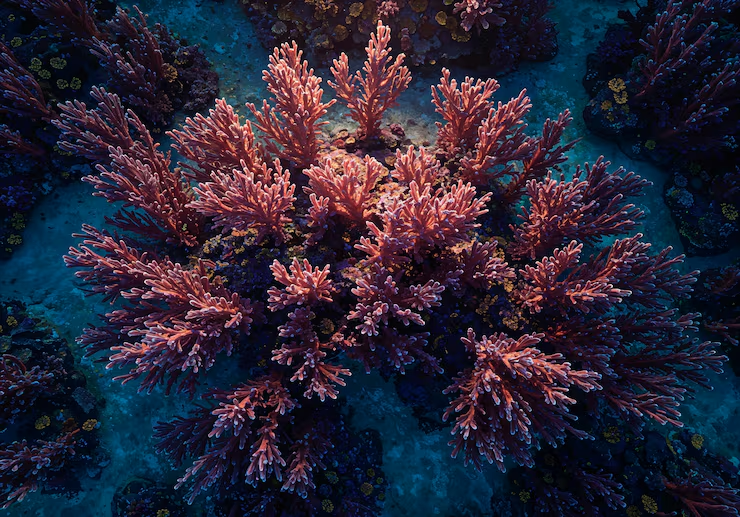
The Red Sea lies between Africa and Asia, connected to the Indian Ocean through the Bab el Mandeb Strait and the Gulf of Aden. Beneath its waters runs the Red Sea Rift, a geological feature still slowly pulling the land apart. What makes the Red Sea a natural wonder is its coral reef system. Stretching along shallow coastal shelves, these reefs are among the oldest and most diverse in the world. They are estimated to be between 5,000 and 7,000 years old. The Red Sea hosts over 200 species of hard and soft corals and more than 1,200 species of fish. About 10 percent of these fish are found nowhere else on Earth. The reefs also attract around 44 species of sharks. These coral systems support fishing communities and tourism industries across the region. At the same time, they face threats from pollution, warming waters, and overuse. Their inclusion among Africa’s natural wonders highlights both their beauty and their vulnerability.
Closing Thoughts
The Seven Natural Wonders of Africa are not frozen landmarks. They move, flood, migrate, erode, and regenerate. They feed cities, guide animals, shape cultures, and store memories older than recorded history. To understand Africa, one must look beyond headlines and stereotypes and listen to the land itself. These wonders speak clearly, for those willing to pay attention.