South African food does not try to impress you at first glance. It grows on you slowly, the way conversations do when you sit longer than planned. It begins with smoke curling into the air from an open fire, the steady warmth of spices cooking without hurry, and the quiet understanding that meals here are meant to be shared. Food in South Africa reflects the country itself: layered, patient, shaped by movement and memory rather than perfection.
Across cities, townships, coastal towns, and rural communities, traditional dishes carry traces of indigenous practices, colonial encounters, migration, and everyday resilience. Some meals were born from scarcity, others from celebration, but all of them speak to how people live, gather, and sustain one another. To taste South Africa properly, you must slow down, listen, and eat with intention.
Below are some of the traditional dishes I recommend that best capture this experience.
1. Boerewors

Boerewors holds a special place in South African food culture because it feels both ordinary and essential at the same time. This thick, coiled sausage appears at family gatherings, community events, roadside stalls, and weekend braais, carrying with it a sense of familiarity that cuts across class and region.
Made primarily from beef and seasoned with coriander, black pepper, cloves, and nutmeg, boerewors varies from butcher to butcher. That variation is part of its charm. Some versions lean heavily on spice, others on richness, but all are meant to be cooked slowly over open flames until the casing snaps gently and the inside stays juicy.
Served in slices or tucked into bread, boerewors is rarely eaten alone and almost never eaten in silence.
2. Bobotie
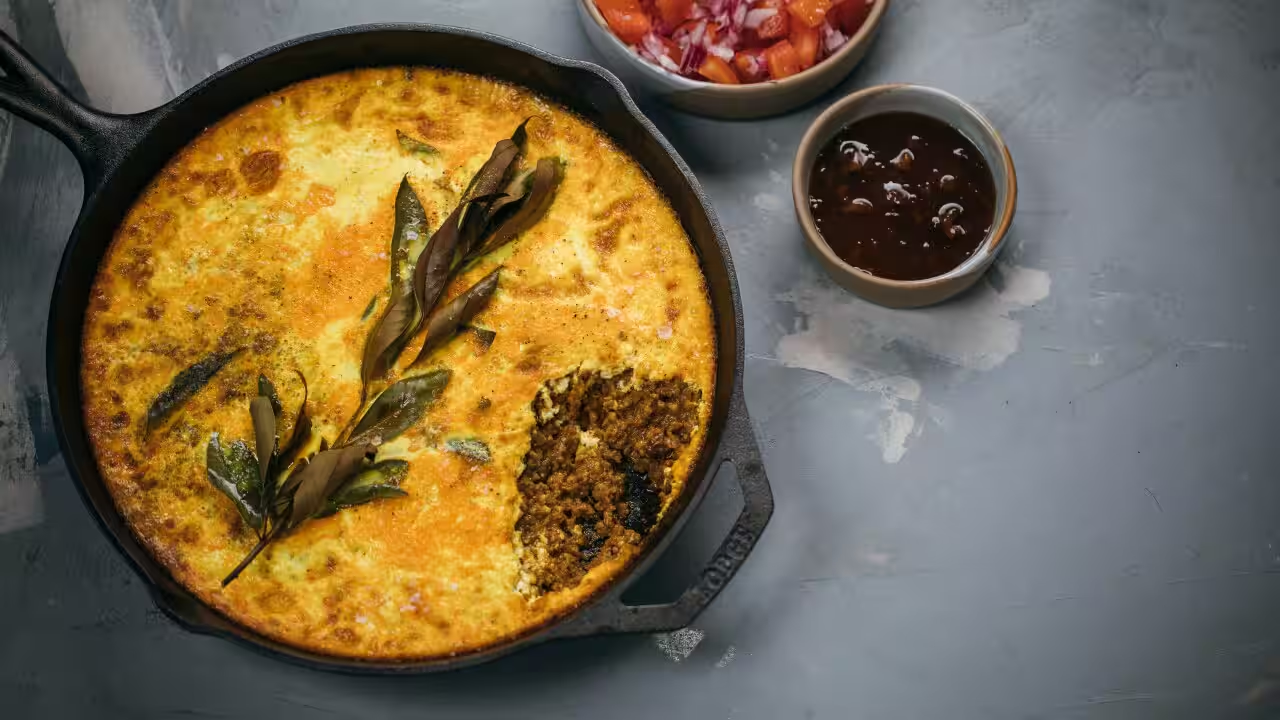
Bobotie is one of South Africa’s most expressive dishes, bringing together sweet and savoury flavours in a way that feels thoughtful rather than bold. Originating from the Cape Malay community, it reflects centuries of cultural exchange, blending local ingredients with influences from Southeast Asia and Europe.
Spiced minced meat is baked beneath a soft egg custard topping, with dried fruit and chutney adding warmth and balance. Served with yellow rice and sambals, bobotie feels ceremonial even when eaten at home.
This is a South African casserole that encourages slower eating and conversation, offering complexity without overwhelming the palate.
3. Bunny Chow
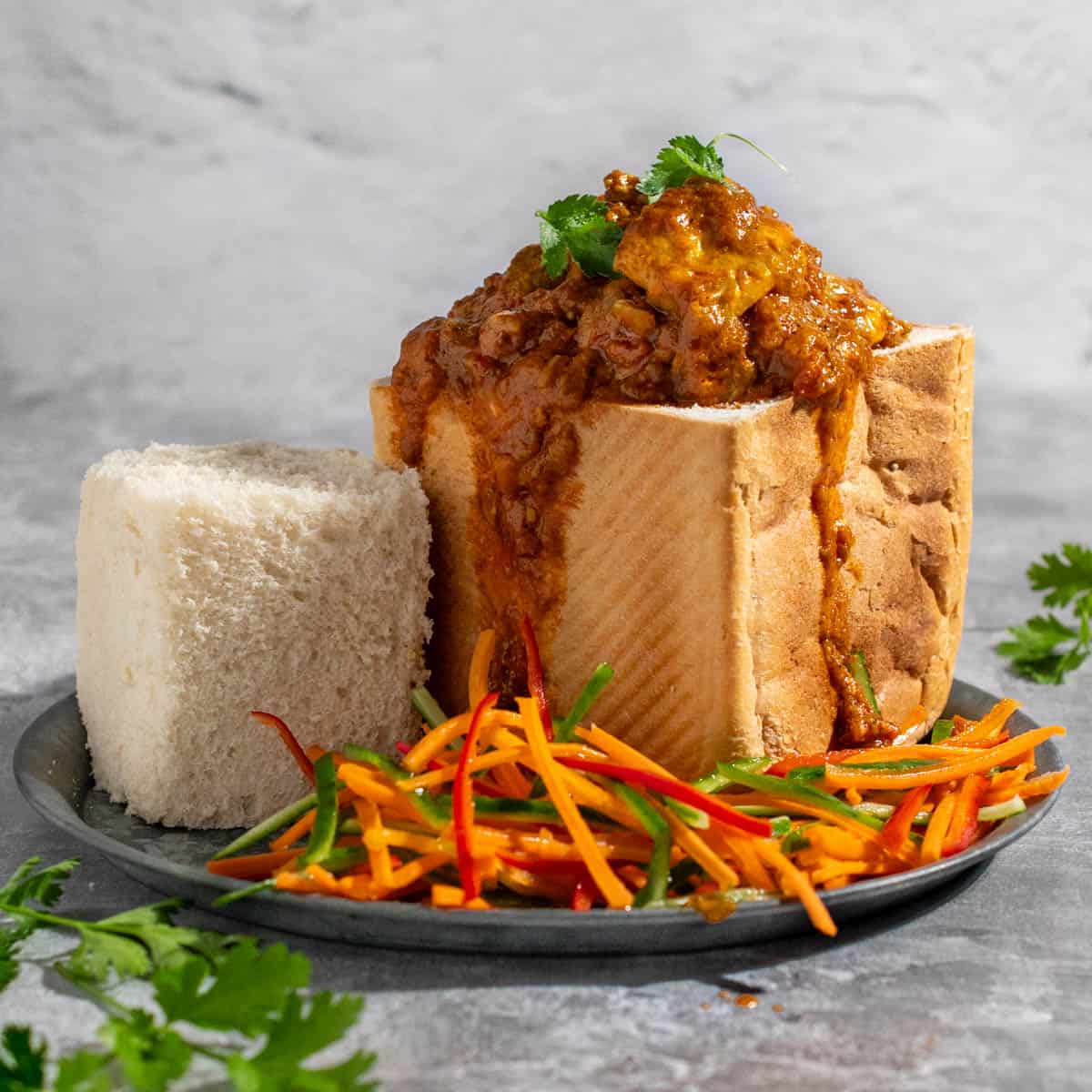
Bunny chow tells a story of adaptation and practicality that later grew into national pride. Created within Durban’s Indian community, this dish consists of a hollowed-out loaf of bread filled generously with curry. Originally designed as an affordable, portable meal, it has since become one of South Africa’s most recognisable foods.
The curry, whether bean-based or made with meat, soaks into the bread as you eat, turning the loaf into part of the experience rather than just a container. Bunny chow is eaten with the hands, often standing or sitting casually, and it carries an energy that feels communal, informal, and deeply satisfying.
4. Potjiekos
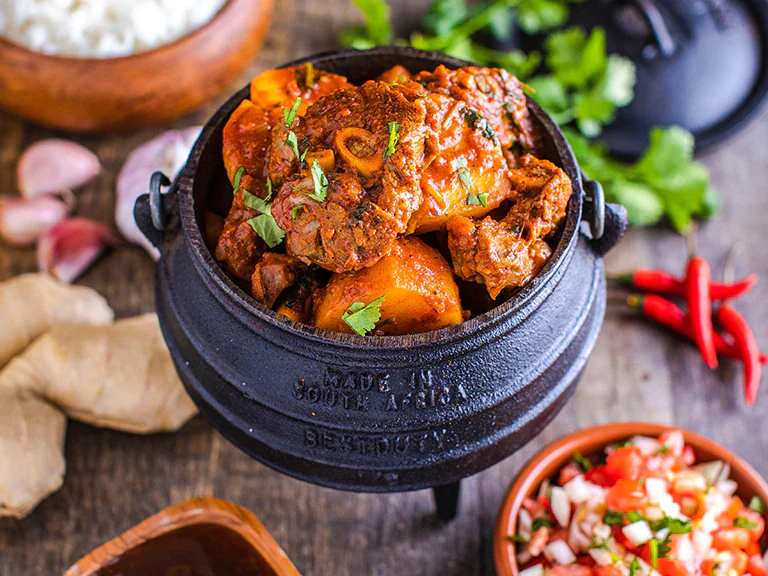
Potjiekos represents patience in cooking form. Prepared in a three-legged cast iron pot over an open fire, this layered stew is assembled carefully and then left untouched for hours. Stirring is discouraged, as the magic lies in letting the ingredients soften and blend at their own pace.
Cooking potjiekos is as social as eating it. People gather around the fire, sharing drinks and conversation while aromas slowly fill the air. When the pot is finally opened, the result is rich, comforting, and deeply flavoured. It is food that rewards time and attention.
5. The South African Braai
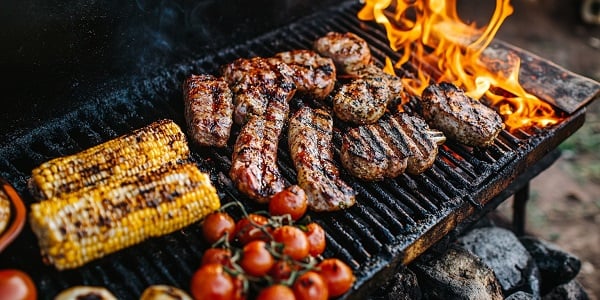
A braai is not simply a method of cooking meat. It is a social ritual that defines South African leisure and hospitality. Friends and family gather around open flames while meat cooks slowly, conversation flows easily, and time stretches without pressure.
Boerewors, lamb chops, steaks, and chicken take turns on the grill, accompanied by salads, pap, and relishes. There is an unspoken respect for the fire and for the person tending it. More than anything, a braai reflects the South African belief that food tastes better when shared.
6. Chakalaka
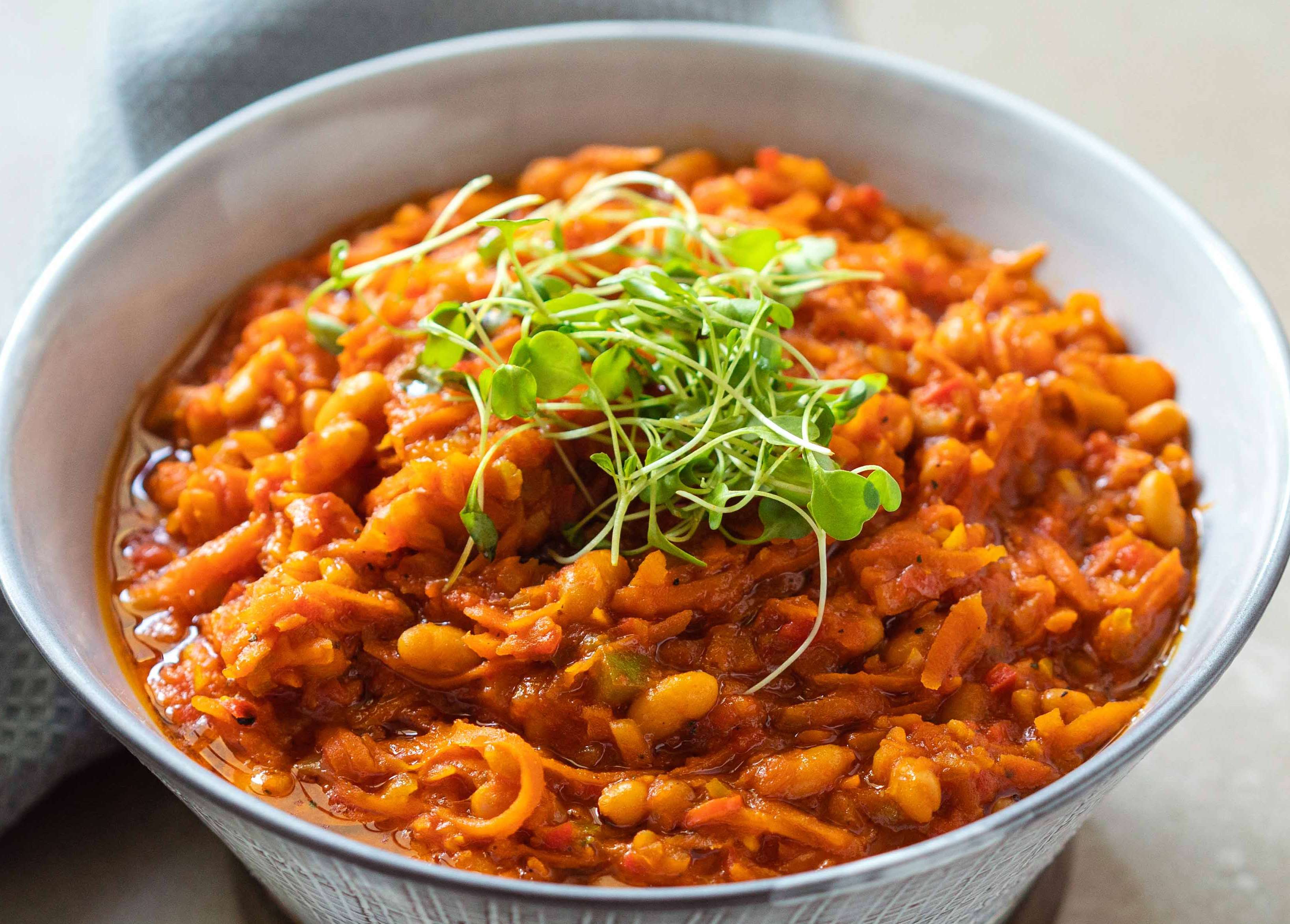
Chakalaka brings brightness and heat to South African meals. This vegetable relish, typically made with carrots, onions, peppers, chillies, and curry spices, originated as a way to add flavour to simple staple foods.
Today, chakalaka appears alongside grilled meats, pap, and stews, offering contrast and energy. Recipes vary widely, with some versions including beans or cabbage, but the spirit remains the same. It is bold, warming, and unapologetically lively.
7. Biltong and Droëwors
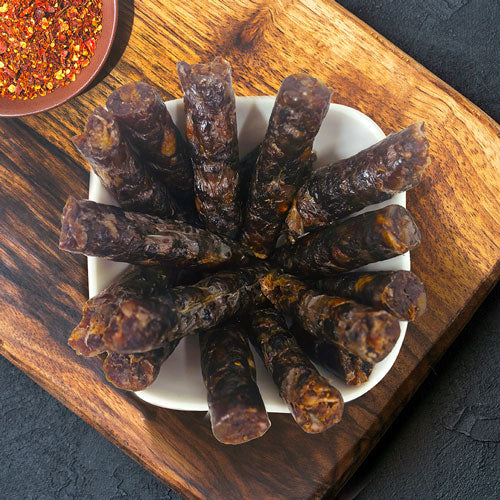
Biltong is more than a snack. It is a cultural constant. Developed as a preservation method during long journeys, air-dried meat seasoned with vinegar and spices has become one of South Africa’s most beloved foods.
Beef is the most common choice, but game meats are equally popular. Droëwors, a dried sausage variation, offers the same flavour profile in a more portable form. These foods are eaten casually, yet they carry deep emotional significance for many South Africans, especially those living abroad.
8. Pap
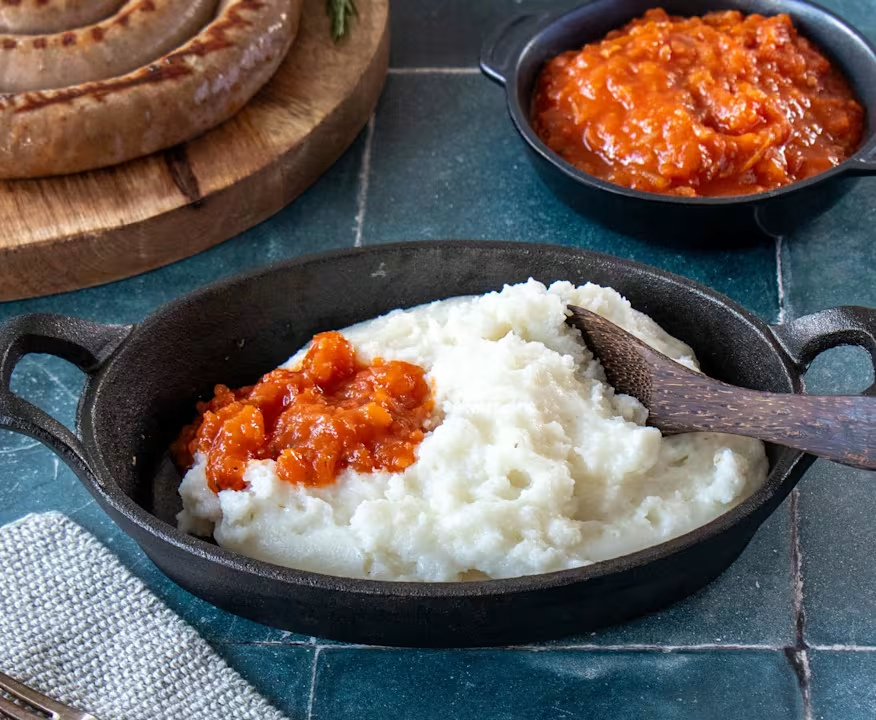
Pap forms the backbone of many South African meals. Made from maize meal, it appears in various textures, from soft and porridge-like to crumbly and firm. On its own, pap is mild, but it is designed to accompany richer foods.
Served with tomato relish, stews, or chakalaka, pap absorbs flavour and brings balance to the plate. Often eaten by hand, it reflects traditions that value simplicity, nourishment, and shared experience.
9. Malva Pudding
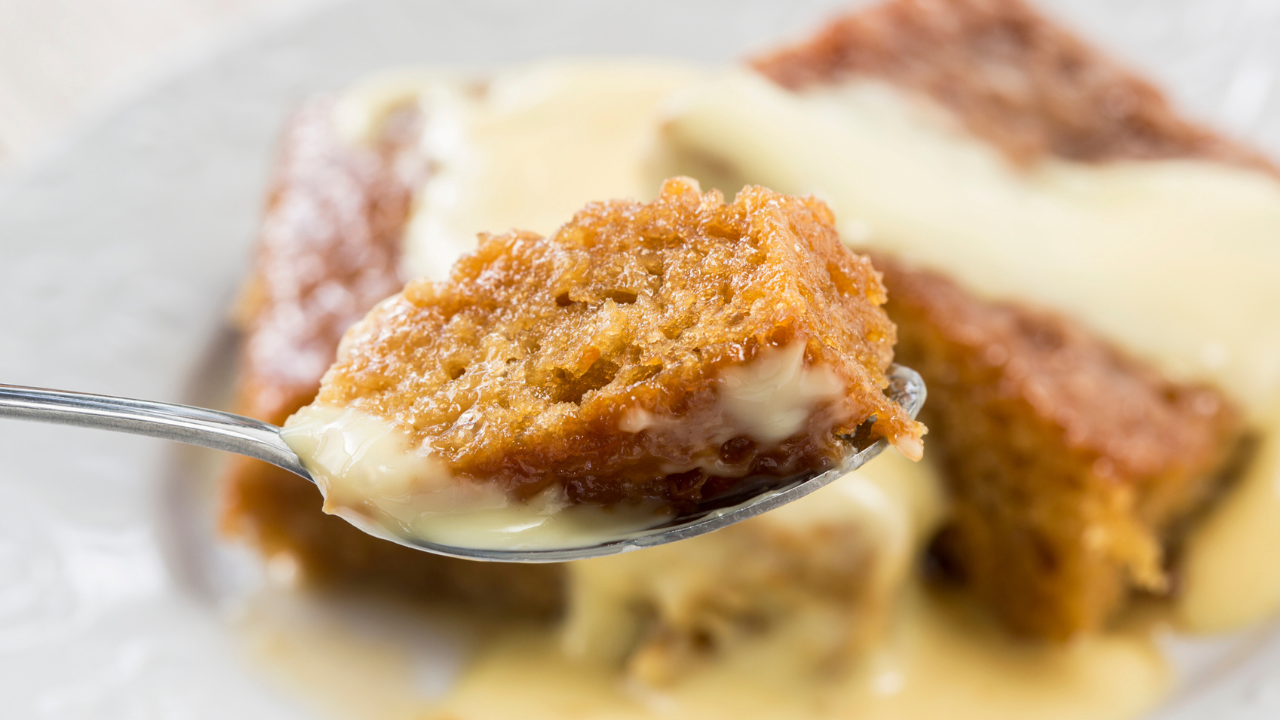
Malva pudding closes many South African meals on a warm, indulgent note. This soft sponge dessert, flavoured with apricot jam and lightly caramelised with cream sauce, is served hot and generously.
It is not delicate or restrained. Instead, it offers comfort and familiarity, often enjoyed with custard or ice cream. Malva pudding reflects a broader approach to food in South Africa, where satisfaction matters more than subtlety.
Closing Note
Traditional South African dishes are best understood not as isolated recipes but as reflections of daily life. They speak of community, patience, and adaptation, shaped by history yet grounded in the present. To eat these foods is to engage with the country beyond its landscapes, one shared meal at a time.
If you enjoyed reading this, check out our next article on must-try traditional foods in Benin Republic