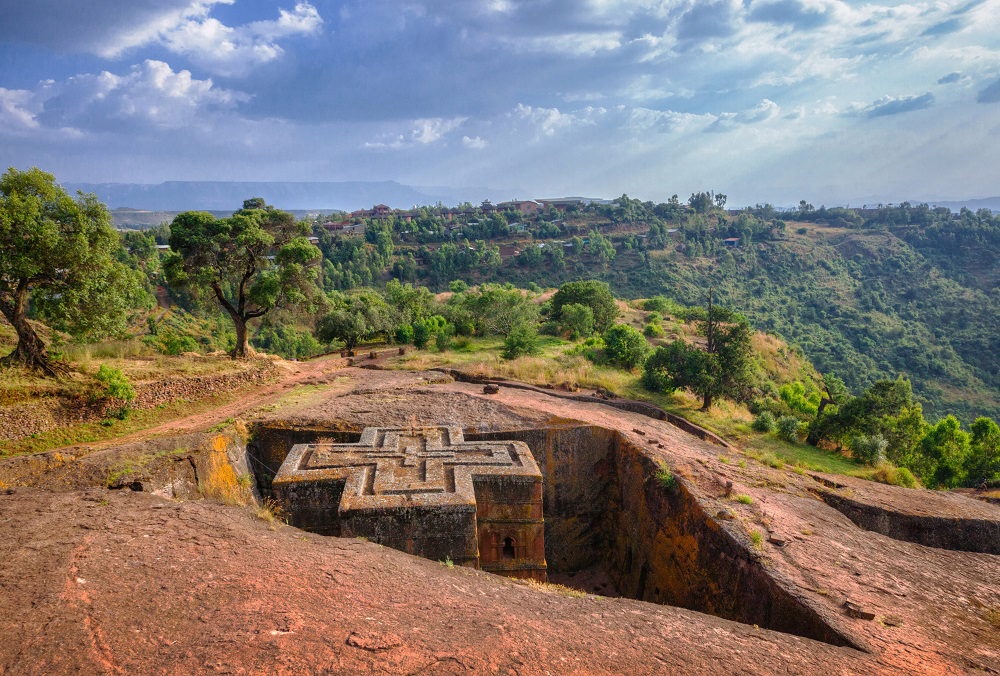
Let me introduce you to Lalibela in Africa’s oldest country, Ethiopia. It is home to eleven rock-hewn churches that have stood for over 800 years.
If you have ever searched for the famous rock churches of Ethiopia or the underground churches in Africa, this is the place you are looking for, and honestly, no description prepares you for standing in front of one.
Carved, Not Built
Most churches are built up, these were carved down. Twelfth century laborers started at ground level and dug downward and inward, sculpting walls, arches, windows, and roofs out of the mountain itself, then hollowed out the interiors by hand. The result is a building with no seams, no joints, and no separate foundation, because the foundation, the walls, and the roof are all the same piece of rock.
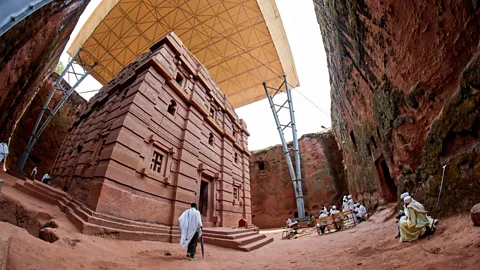
Bete Giyorgis, the Church of Saint George, is the one you have probably seen in photos without knowing its name. Carved in the shape of a Greek cross, sunk about 12 meters into the ground, it looks from above like someone stamped a cross-shaped cookie cutter into the earth. Walk down the narrow trench that leads to its entrance and the walls rise around you until you are standing in a hidden courtyard, with the church itself set below, silent and complete.
Why Lalibela Was Built This Way
King Lalibela commissioned these churches after a pilgrimage to Jerusalem convinced him that Ethiopia needed its own holy city, one that ordinary people could reach without the danger of a long journey through hostile territory. The plan was to recreate the sacred geography of Jerusalem in the Ethiopian highlands, including a "River Jordan" that still runs through the site today.
Local tradition holds that angels worked alongside the human laborers at night, finishing in hours what took men days. Historians point instead to a workforce of thousands and decades of sustained labor. Either explanation leaves you with the same fact: eleven churches, still standing, still in active religious use, carved by hand from living rock, and now on the list of anyone researching for religious sites carved from rock.
A Living Site, Not a Ruin
What separates Lalibela from most ancient monuments is that it never stopped being used. Priests in white robes move through the same corridors carved by their predecessors centuries ago.
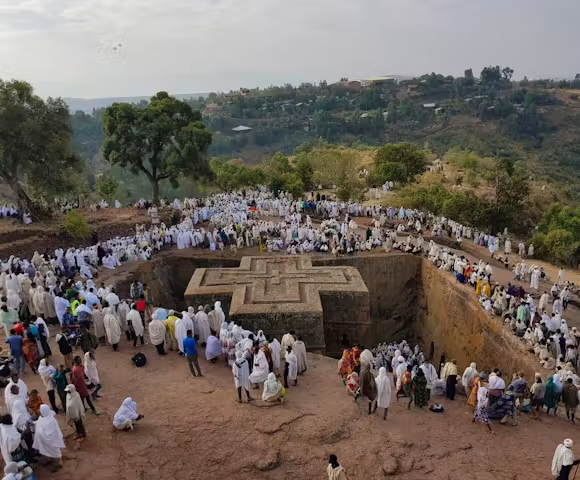
During Genna, the Ethiopian Christmas celebrated in early January, tens of thousands of pilgrims arrive, and the churches fill with chanting that echoes off rock walls shaped specifically to hold sound. This is not a museum piece behind glass but a functioning place of worship that happens to be a UNESCO World Heritage Site.
The churches are connected by a network of tunnels and trenches, some pitch dark, requiring you to feel your way along cold stone walls until light reappears. One tunnel, symbolically named for the passage from hell to heaven, plunges you into total darkness before opening back into daylight and a courtyard church. It is theater, architecture, and theology combined into a single physical experience.
Getting There and What to Expect
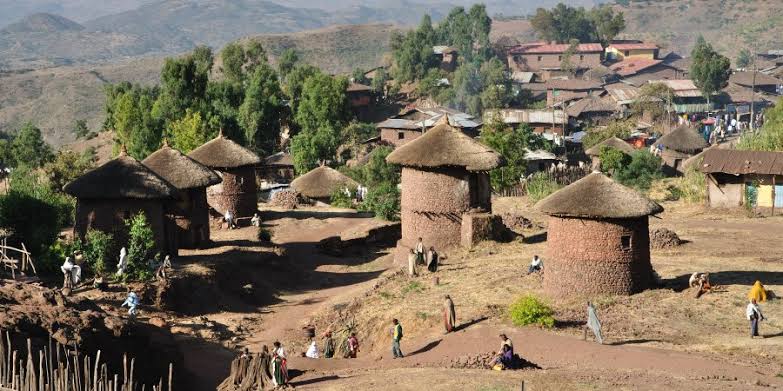
Lalibela sits in the northern highlands of Ethiopia, reachable by a short flight from Addis Ababa. The town itself has grown around the churches, with guesthouses and family-run restaurants serving injera and coffee grown in the surrounding hills. Mornings are best for visiting, when the light drops directly into the carved trenches and priests are often present for prayers.
Bring sturdy shoes. The rock floors are uneven, worn smooth in places by centuries of footsteps and slick after rain in others. Modest dress is expected, since these remain working churches, not ruins. A local guide is worth the cost, since the site's layout, history, and religious symbolism are easy to miss without context, and the difference between wandering through and understanding what you are looking at is enormous.
If you are the type of tourist that is interested in the best rock-cut architecture in the world or Ethiopia UNESCO sites, you have already found what you were looking for. Lalibela does not photograph as easily as it should, because so much of what makes it remarkable, the silence, the scale, the sense of standing inside something the earth itself was persuaded to become, only registers once you are standing there.
Come see it.
If you enjoyed reading this, then check out our next article on the bronze sculptures of ancient Benin kingdom.