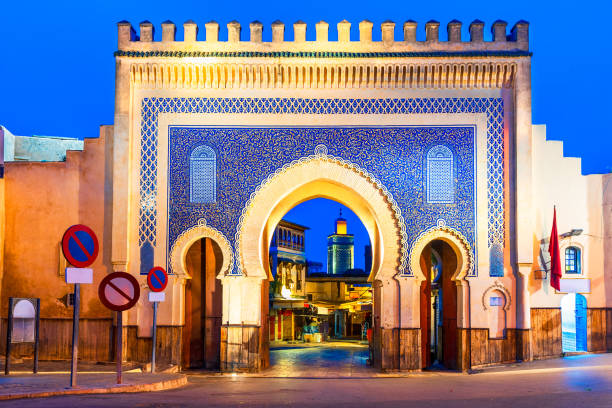
In northern Morocco, beyond the wide boulevards and modern cafes of newer cities, Fes el Bali continues to exist on its own terms. It is not a monument frozen in time or a carefully arranged heritage display. It is a working city, densely packed and endlessly active, where history, religion, craft, and daily survival unfold inside narrow alleyways that have changed little in over a thousand years.
Founded in the late eighth and early ninth centuries, Fes el Bali is the oldest part of Fez and one of the most intact medieval cities in the world. It is also one of the largest car free urban areas on earth. Every movement inside the medina happens on foot, by donkey, or by handcart. This is not a design choice. It is how the city has always functioned.
In 1981, UNESCO designated Fes el Bali a World Heritage Site, recognizing its architectural integrity and cultural importance. That recognition, however, did not turn the medina into a museum. Today, it remains home to tens of thousands of residents.
Children walk to Quranic schools along paths their ancestors used centuries ago. Artisans still shape brass, leather, and tile using methods passed down through generations. The call to prayer still structures the day, echoing through courtyards and corridors as it has for more than a millennium.
A City Built by Learning and Faith
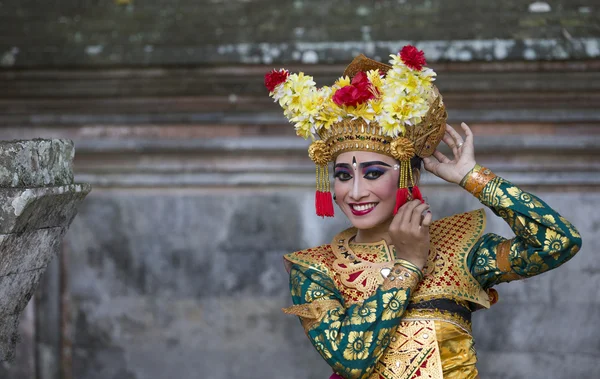
Fes el Bali did not grow by accident, it was founded by Idris II in 808 CE and quickly became a center of Islamic learning, trade, and diplomacy. Scholars from across North Africa, Andalusia, and the wider Islamic world settled there, drawn by patronage, stability, and intellectual freedom.
At the heart of this scholarly tradition stands the University of al Qarawiyyin, founded in 859 CE by Fatima al Fihri. Often cited as the oldest continuously operating university in the world, al Qarawiyyin shaped generations of thinkers, jurists, astronomers, and theologians. Its influence reached far beyond Morocco, contributing to intellectual currents that later fed into Europe.
The medina grew around institutions like this. Mosques doubled as schools. Libraries were embedded into religious complexes. Knowledge was not separated from daily life. It was woven into the city’s layout, its rhythms, and its expectations of citizenship.
Walking through Fes el Bali today, this intellectual heritage remains visible. Manuscripts are still preserved in private collections and mosque libraries. Quranic schools continue to operate. Religious festivals still draw communities together in patterns that date back centuries.
Markets That Never Close
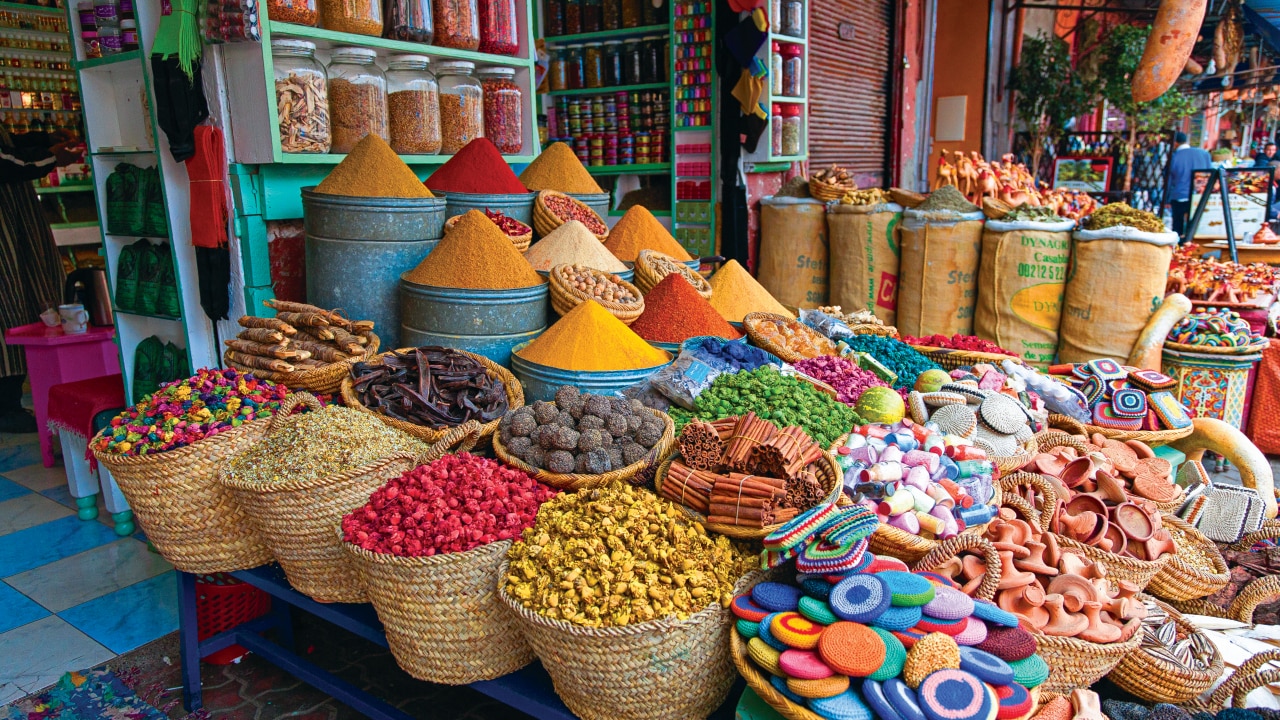
What surprises many visitors is not the age of Fes el Bali, but its energy. The medina is loud, crowded, and constantly in motion. Markets spill into alleyways. Shopkeepers shout greetings and prices. Donkeys weave through foot traffic carrying goods from one quarter to another.
The souks of Fes el Bali are organized by craft, a system that has existed for centuries. Tanners work in the same district where leather has been processed since medieval times. Metalworkers hammer brass and copper in open workshops. Dyers handle natural pigments that stain hands and walls alike.
Perhaps the most famous of these is the Chouara Tannery, where leather is treated using traditional methods involving limestone, water, and natural dyes. From above, the tannery looks like a mosaic of stone vats. From ground level, it smells sharp and unmistakable. Both experiences are part of the city’s honesty. Nothing here is softened for comfort.
Trade remains the backbone of the medina’s economy. Many families still rely on crafts learned at home rather than in formal schools. Skills pass from parent to child, reinforced by apprenticeship and repetition rather than certificates.
A Maze With Purpose
Fes el Bali is often described as a maze, but its complexity is functional. The narrow streets create shade in intense heat. Dead ends provide privacy for residential areas. Public spaces open suddenly after long corridors, offering relief and orientation.
The city was designed for community life rather than spectacle. Homes turn inward around courtyards, shielding families from noise and heat. Fountains serve both spiritual and practical needs. Hammams anchor social life, especially for women.
There are over 9,000 streets in the medina, many unnamed. Navigation relies on memory, landmarks, and local knowledge. Residents move through it with ease, while visitors often need guides to avoid getting lost. This contrast highlights the difference between living knowledge and tourist curiosity.
Tourism and Pressure on a Fragile City
Fes el Bali draws millions of visitors each year. Tourists arrive seeking authenticity, history, and sensory overload. Tourism provides income and employment, supporting guides, riads, artisans, and vendors. At the same time, it places enormous pressure on fragile infrastructure.
Many of the medina’s buildings are over several hundred years old. Time, weather, and overcrowding have taken their toll. Walls crack. Roofs collapse. Drainage systems struggle under modern use. Climate change has increased rainfall variability, leading to water damage in areas never designed for such conditions.
Uncontrolled tourism also risks reshaping daily life. Rising property prices push local families out. Traditional workshops give way to souvenir stalls. Residential spaces are converted into guesthouses, changing neighborhood dynamics. These challenges are not unique to Fes el Bali, but the scale here is especially high because the city is still fully inhabited.
Morocco’s Restoration Effort
Recognizing these risks, Morocco has launched a large scale restoration and preservation program aimed at protecting Fes el Bali without stripping it of life. The initiative focuses on stabilizing historic buildings, restoring religious and educational sites, improving drainage, and reinforcing infrastructure.
Thousands of houses classified as structurally vulnerable have been surveyed. Restoration work prioritizes traditional materials and techniques, ensuring repairs do not erase architectural authenticity. Artisans trained in historical methods are central to the process, turning preservation into an economic opportunity rather than an external intervention.
The government has also worked with UNESCO to balance conservation with development. Rather than clearing residents out, the strategy emphasizes keeping families in place while improving safety and living conditions. This approach acknowledges a key truth that Fes el Bali survives because people live there. Remove daily life, and the medina becomes a shell.
A City That Teaches Patience
To experience Fes el Bali fully requires slowing down. The city does not reward rushing. Movement happens at human speed. Sounds overlap. Conversations interrupt transactions. Directions come as stories rather than coordinates.
Visitors who expect comfort often struggle at first. The streets are uneven. The noise is constant. Privacy is limited. Yet those who stay long enough begin to understand the rhythm beneath the chaos.
Morning brings deliveries and prayers while midday sees markets at their busiest. Afternoon slows as heat builds, and evening returns energy as families gather and streets fill again. These cycles have remained consistent across centuries, even as technologies and politics changed around them.
Why Fes el Bali Still Matters
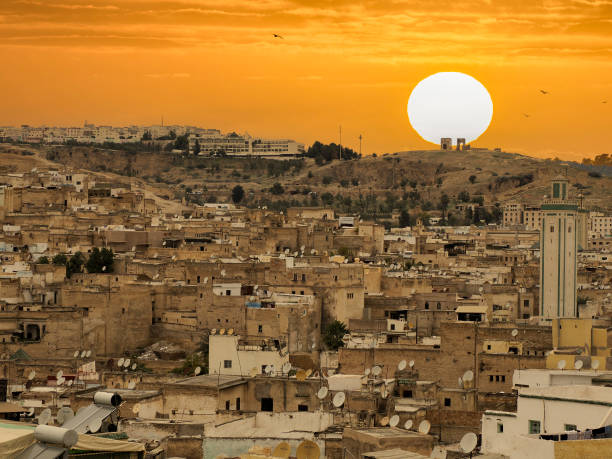
Fes el Bali matters because it proves continuity is possible. In a world where historic cities are often sanitized or emptied, it shows another path. It demonstrates that heritage can remain active, complicated, and human.
It also challenges assumptions about Africa and the Islamic world as static or backward. Fes was once a global center of knowledge, trade, and diplomacy. Its influence shaped law, science, and culture far beyond Morocco. That legacy did not disappear, rather it adapted. Today, the medina stands as a reminder that progress does not always mean replacement. Sometimes it means repair, respect, and restraint.
A Living Inheritance
Fes el Bali is not simply something to see, it's something to enter, listen to, and navigate carefully. Every alley carries memory. Every craft carries lineage, and every call to prayer ties the present to a deep past.
As restoration continues and tourism grows, the challenge remains delicate. Protect the city without embalming it. Welcome visitors without displacing residents. Preserve structures without erasing struggle. For now, Fes el Bali continues to breathe, argue, trade, teach, and pray. It does what it has always done, it lives.
And in doing so, it reminds the world that history does not always sit behind glass. Sometimes, it walks beside you, brushing past in a narrow street, carrying goods on its back, speaking in a language shaped by centuries of shared life.