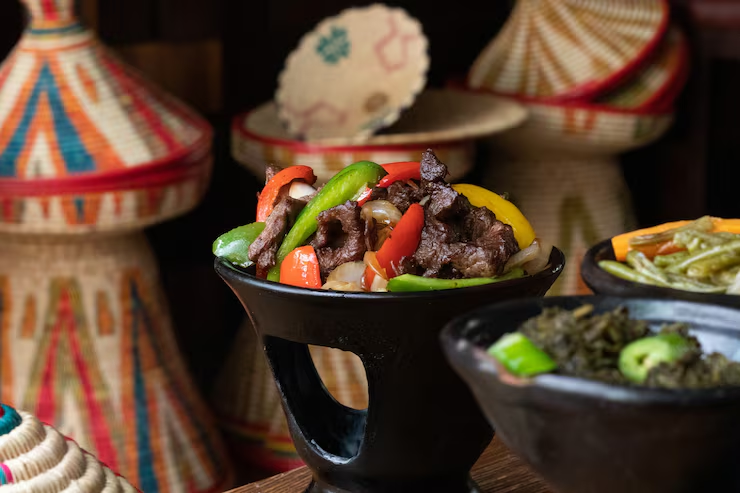
African heritage tours are reshaping how the global Black diaspora reconnects with the continent. From Ghana's slave-trade castles to Senegal's Île de Gorée, Ethiopia's Lalibela, and Nigeria's Badagry, a new generation of travelers is moving beyond safari brochures and toward ancestry, history, and identity. This guide breaks down where to go, how to choose a tour, what it costs, and what to expect on the ground in 2026.
Why African heritage tours matter in 2026
Ghana's Year of Return in 2019 unlocked something durable. Yearly arrivals from the United States, the UK, the Caribbean, and Brazil keep climbing, and African governments are leaning in — visa-on-arrival for diaspora passport holders, restored heritage sites, and citizenship pathways in countries like Ghana and Sierra Leone. A heritage tour today is less a one-off trip and more an entry point into long-term relationships with the continent.
The top heritage destinations to consider
- Ghana — Cape Coast and Elmina castles, the W.E.B. Du Bois Center in Accra, and Assin Manso's 'last bath' memorial.
- Senegal — Île de Gorée's House of Slaves, Dakar's African Renaissance Monument, and Saint-Louis's colonial old town.
- Nigeria — Badagry slave route, the National Museum in Lagos, and the Osun-Osogbo sacred grove.
- Benin — Ouidah's Door of No Return, voodoo heritage trails, and the royal palaces of Abomey.
- Ethiopia — The rock-hewn churches of Lalibela, Aksum's stelae, and Addis Ababa's National Museum (home of Lucy).
- Tanzania and Zanzibar — Stone Town's slave-market memorial alongside Swahili-coast cultural tours.
- South Africa — Robben Island, Cape Town's District Six Museum, and the Apartheid Museum in Johannesburg.
How to choose the right heritage tour operator
Heritage travel is emotionally heavier than a typical vacation, so the operator matters more than the itinerary. Look for guides who are historians, descendants, or community-trained interpreters — not generic city-tour staff. Ask whether the tour includes time for reflection, community visits, and meals with local families, not just monument photo stops. Verify that the operator is registered locally and that a meaningful share of revenue stays with the communities you're visiting.
- Confirm the lead guide's background and language fluency before booking.
- Ask for a sample day-by-day itinerary in writing, including free time.
- Check cancellation, refund, and rebooking terms in plain language.
- Read recent reviews from diaspora travelers, not just general tourists.
- Confirm group size — heritage sites lose their weight in crowds of 40+.
What a typical 10-day heritage trip looks like
A balanced 10-day Ghana itinerary usually opens with two days in Accra (Du Bois Center, Jamestown, Makola Market), moves to Cape Coast and Elmina for the castles and Kakum National Park, includes a day in Assin Manso for the river ceremony, and closes with cultural stops in Kumasi (the Manhyia Palace and Kente weaving villages) before returning to Accra. Senegal, Benin, and Nigeria itineraries follow a similar rhythm: arrival and orientation, heavy historical days in the middle, community and cultural days near the end.
Budget: what African heritage tours actually cost in 2026
Mid-range, all-inclusive heritage tours from North America or Europe typically run USD 2,800–4,500 per person for 10 days, excluding international flights. Independent travel using local operators can land between USD 1,500 and 2,500 for the same itinerary. Premium tours with private guides, boutique hotels, and curator-led briefings range from USD 5,500 upward. Expect international flights to add USD 900–1,800 depending on origin and season.
Visas, vaccinations, and practical prep
Ghana offers e-visa and visa-on-arrival for many diaspora travelers; Kenya, Rwanda, and Sierra Leone have similar diaspora-friendly schemes. Yellow fever vaccination is required for most West and Central African countries — carry the yellow card. Pack light cotton clothing, reef-safe sunscreen, a power adapter, and a small notebook. Heritage tours generate a lot of processing; many travelers say journaling at the end of each day mattered as much as the sites themselves.
Frequently asked questions
Q: What is an African heritage tour?
A: An African heritage tour is a guided trip built around the history, culture, and ancestry of Black communities — often centered on transatlantic-slave-trade sites, pre-colonial kingdoms, and contemporary diaspora reconnection. It's typically led by historians or community guides rather than general tour operators.
Q: Which African country is best for a first heritage tour?
A: Ghana is the most common entry point for first-time diaspora travelers because of strong infrastructure, English as the official language, visa-on-arrival options, and well-established sites like Cape Coast Castle, Elmina, and Assin Manso. Senegal and Nigeria are popular next-trip choices.
Q: How long should a heritage tour be?
A: Ten to fourteen days is the sweet spot. Shorter than a week and the historical sites feel rushed; longer than two weeks and most travelers want to add a non-heritage segment — beach, safari, or a second country.
Q: Are heritage tours safe?
A: The mainstream heritage destinations (Ghana, Senegal, South Africa, Rwanda, Tanzania) are broadly safe for organized tours. Standard travel precautions apply: avoid flashing valuables, use vetted operators, and follow local guidance. Reputable operators carry liability insurance and have emergency protocols.
Q: Can I apply for citizenship or right of abode after a heritage tour?
A: Yes — several countries now offer formal pathways. Ghana's Right of Abode and citizenship programs and Sierra Leone's diaspora citizenship scheme are the most active. These are legal processes, not tour add-ons, and require documentation and time.
Q: What's the best time of year to book?
A: November through March is dry season across most of West Africa and the most popular booking window. December peaks around Ghana's Detty December and Afro Nation. Shoulder months — April, May, October — offer better prices and smaller crowds.
Start planning your heritage journey
Browse vetted heritage tours on MyBlak, talk to a curator, or build a custom itinerary with the AI trip planner. Whether you're going for the first time or returning, the right tour turns history into something you carry home.